
Table of Contents
ToggleHigh school tools can make the difference between struggling through assignments and actually thriving. The right supplies help students stay organized, complete projects on time, and retain information more effectively. But with so many options available, it’s easy to feel overwhelmed.
This guide breaks down the essential high school tools students need across every subject area. From technology and writing supplies to math equipment and study aids, these items form the foundation of academic success. Whether a student is starting freshman year or preparing for college applications, having the right tools matters more than most people realize.
Key Takeaways
- The right high school tools—from laptops and calculators to planners and notebooks—form the foundation of academic success across all subjects.
- Handwriting notes improves memory retention compared to typing, making physical writing supplies still essential despite the digital shift.
- A combination of paper planners for daily tasks and digital calendars for long-term events helps students manage multiple classes and extracurriculars effectively.
- Flashcard apps using spaced repetition, like Quizlet and Anki, transform passive studying into active learning that sticks.
- STEM classes require specialized high school tools such as graphing calculators (TI-84 series), compass sets, and safety goggles that general supplies can’t replace.
- Cloud storage services and consistent file naming conventions prevent lost assignments and keep digital work organized throughout the school year.
Technology and Digital Tools
Technology has become one of the most important high school tools in modern education. A reliable laptop or Chromebook sits at the top of the list. Most schools now require digital submissions, online research, and collaborative projects that demand computer access.
A good pair of headphones helps students focus during study sessions and participate in video-based learning. Noise-canceling options work especially well in busy households or shared spaces.
Here are the essential digital high school tools every student should consider:
- Laptop or Chromebook – For research, writing papers, and completing online assignments
- Graphing calculator – Required for advanced math classes like algebra II, pre-calculus, and calculus
- USB flash drive – A backup for important files when cloud storage fails
- Portable charger – Keeps devices powered during long school days
Students should also familiarize themselves with productivity software. Google Workspace and Microsoft Office remain standard across most high schools. Learning keyboard shortcuts and basic formatting saves hours over a four-year period.
Cloud storage services like Google Drive or Dropbox prevent the nightmare of lost assignments. Smart students back up their work automatically and never rely on a single device.
Writing and Note-Taking Supplies
Even though the digital shift, physical writing supplies remain critical high school tools. Research consistently shows that handwriting notes improves memory retention compared to typing. The brain processes information differently when pen meets paper.
A quality notebook system keeps subjects organized. Some students prefer individual notebooks for each class, while others use a large five-subject notebook. The best choice depends on personal preference and locker availability.
Essential writing high school tools include:
- Mechanical pencils – No sharpening required, consistent line quality
- Ballpoint and gel pens – For essays, forms, and permanent assignments
- Highlighters – Multiple colors help categorize information during reading
- Correction tape – Cleaner than liquid white-out and dries instantly
- Index cards – Perfect for flashcards, vocabulary study, and speech preparation
Loose-leaf paper paired with a sturdy binder offers flexibility. Students can add, remove, and reorganize pages without destroying their notes. This system works particularly well for classes with handouts and worksheets.
A good pen case or pencil pouch prevents the frustrating search through backpack depths. Students who keep their writing tools accessible waste less time and stay focused longer.
Organization and Planning Essentials
Organization separates successful students from those who constantly scramble. The right high school tools for planning help students manage multiple classes, extracurriculars, and social commitments without dropping the ball.
A physical planner remains surprisingly effective. Writing down deadlines creates a stronger mental commitment than digital reminders alone. Many students use a combination approach, a paper planner for daily tasks and phone calendar for long-term events.
Key organizational high school tools include:
- Academic planner – Monthly and weekly views help track assignments and test dates
- Color-coded folders – One per subject prevents paper chaos
- Binder with dividers – Keeps handouts, notes, and returned assignments sorted
- Sticky notes – Quick reminders that attach anywhere
- Backpack with compartments – Protects electronics and separates supplies
File organization extends to digital spaces too. Students should create folders for each class on their computer and use consistent naming conventions. “EnglishEssay_Final_v2” beats “document1” every time.
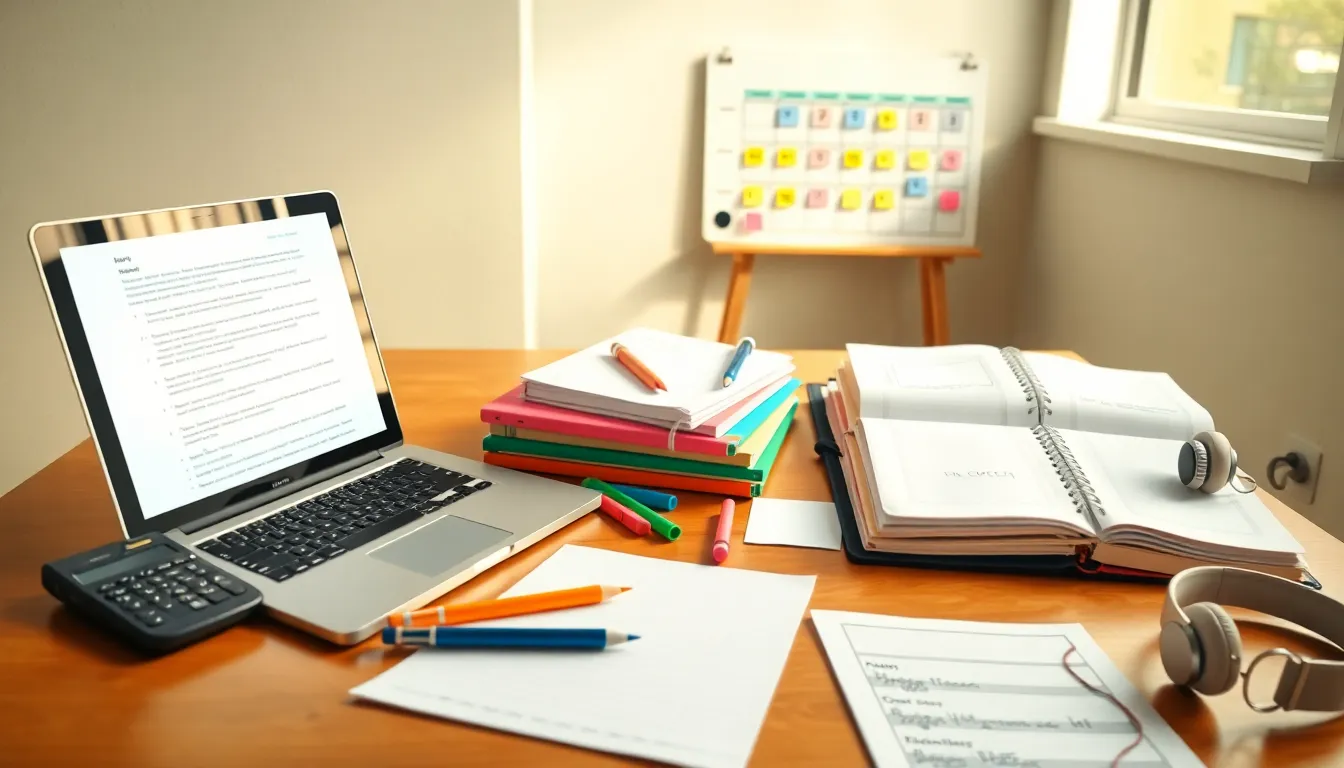
A small whiteboard or cork board at home provides a visual command center. Students can post weekly schedules, upcoming deadlines, and motivational reminders. This simple high school tool keeps priorities visible and top of mind.
Study Aids and Reference Materials
Effective studying requires more than just reading textbooks repeatedly. The right high school tools transform passive review into active learning that sticks.
Flashcard apps like Quizlet and Anki use spaced repetition algorithms. This technique presents information at optimal intervals for memory formation. Physical flashcards work too, but digital versions offer shuffling and progress tracking.
Essential study-focused high school tools:
- Flashcard apps or index cards – Active recall beats passive reading
- Dictionary and thesaurus – Print or digital versions expand vocabulary
- Subject-specific reference guides – Quick lookup for formulas, grammar rules, and key concepts
- Timer or Pomodoro app – The 25-minute focus technique improves productivity
- Noise machine or focus playlist – Blocks distractions during study sessions
A dedicated study space matters as much as any physical tool. Students who study in the same quiet location build stronger focus habits. The brain begins associating that space with concentration.
Online resources supplement traditional high school tools effectively. Khan Academy, Crash Course, and subject-specific YouTube channels offer free explanations when textbooks fall short. Smart students bookmark their favorite educational channels for quick access.
Math and Science Equipment
STEM classes demand specialized high school tools that general supplies can’t replace. Students taking advanced math and science courses need equipment that meets classroom requirements.
A scientific or graphing calculator tops the list. The TI-84 series remains the standard in most American high schools, though newer models like the TI-Nspire offer additional features. Students should learn their calculator’s functions before test day, these devices do far more than basic arithmetic.
Critical math and science high school tools:
- Graphing calculator – Required for standardized tests like the SAT and ACT
- Compass and protractor set – Geometry class essentials
- Ruler with metric and imperial measurements – Needed for lab work and technical drawings
- Safety goggles – Many schools require student-owned pairs for chemistry and biology labs
- Lab notebook – Bound notebooks prevent page removal for authentic lab records
Graph paper supports both math and science work. The grid format helps students create accurate graphs, plot data points, and solve geometry problems with precision.
A basic set of colored pencils proves surprisingly useful. Science diagrams, cell structures, and mathematical models often require color-coding. These high school tools cost little but add significant value to visual assignments.
Students in physics or advanced chemistry may need additional equipment. A small toolkit with screwdrivers, wire cutters, and pliers supports lab projects and engineering challenges.