
Table of Contents
ToggleElementary school vs. primary school, what’s the real difference? Parents often encounter both terms and wonder if they mean the same thing. The short answer: they’re similar, but regional preferences and slight structural differences set them apart. In the United States, “elementary school” is the standard term. In the United Kingdom, Australia, and many other countries, “primary school” takes the lead. This article breaks down what each term means, where each is used, and how to pick the right school for a child.
Key Takeaways
- Elementary school is the standard term in the United States and Canada, while primary school is used in the UK, Australia, and Commonwealth countries.
- Both elementary and primary schools serve children ages 5–11 and focus on foundational skills like reading, writing, math, and science.
- The main differences between elementary school vs primary school are geographic terminology and slight variations in grade structure, not educational quality.
- When choosing a school, prioritize curriculum, class size, teacher quality, and school environment over the name used.
- Primary schools often emphasize play-based learning in early years, while U.S. elementary schools typically assign one teacher per grade for stability.
What Is Elementary School?
Elementary school refers to the first stage of formal education in the United States. Children typically attend elementary school from kindergarten through fifth or sixth grade. This puts most students between the ages of 5 and 11.
The curriculum focuses on foundational skills. Students learn reading, writing, math, science, and social studies. Many elementary schools also offer art, music, and physical education. The goal is to build core academic abilities that prepare children for middle school.
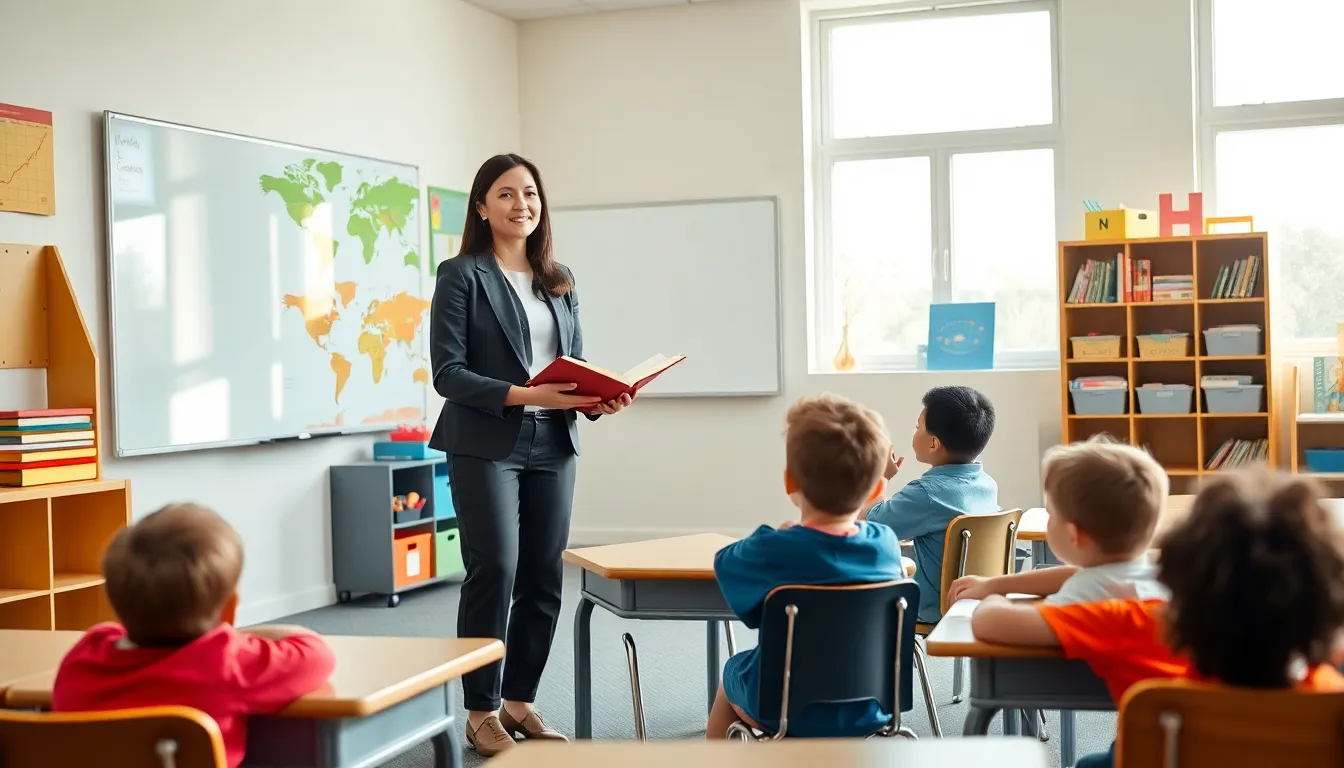
Elementary school classrooms usually have one primary teacher per grade. This teacher covers most subjects throughout the day. The structure helps younger students form a strong bond with their instructor and creates a stable learning environment.
In most U.S. states, elementary school attendance is mandatory. Laws require children to begin formal schooling by age 6 or 7, depending on the state. Some families opt for private elementary schools, while others choose public options funded by local taxes.
What Is Primary School?
Primary school serves the same basic purpose as elementary school. It provides early childhood education and covers fundamental academic subjects. But, the term “primary school” is more common outside the United States.
In the United Kingdom, primary school includes children from ages 4 or 5 to 11. Students progress through Reception (the first year) and then Years 1 through 6. After primary school, they move on to secondary school.
Australia, Ireland, and many Commonwealth nations also use the term primary school. The grade structure varies slightly by country, but the focus remains consistent: literacy, numeracy, science, and social development.
Primary schools often emphasize play-based learning in the early years. This approach helps young children develop social skills alongside academic knowledge. Teachers encourage exploration, creativity, and group activities before transitioning to more structured lessons in later grades.
Key Differences Between Elementary and Primary School
While elementary school and primary school share many similarities, a few key differences exist. These relate mainly to age ranges, grade structures, and geography.
Age Ranges and Grade Levels
Elementary school in the U.S. generally covers kindergarten through grade 5 or 6. Students are usually between 5 and 11 years old. Some districts split elementary school into lower (K–2) and upper (3–5) divisions.
Primary school in the UK spans Reception through Year 6. Children start at age 4 or 5 and finish at age 11. The UK system also divides primary school into Key Stage 1 (ages 5–7) and Key Stage 2 (ages 7–11).
In Australia, primary school runs from Foundation (or Prep) through Year 6. Students range from about 5 to 12 years old. The exact structure depends on the state or territory.
Geographic Usage of Each Term
The term “elementary school” dominates in the United States and Canada. Americans rarely use “primary school” in everyday conversation.
“Primary school” is the standard term in the United Kingdom, Australia, New Zealand, Ireland, and most Commonwealth countries. Some international schools use “primary school” regardless of location to align with British educational terminology.
This geographic split explains why parents moving between countries often feel confused. A child leaving an American elementary school might enter a British primary school and find the experience nearly identical, just with different labels.
How to Choose the Right School for Your Child
Choosing between schools, whether called elementary or primary, depends on several practical factors. The name matters less than what the school actually offers.
First, consider the curriculum. Does the school teach subjects that align with educational standards in the area? Look for a balanced approach that includes core academics, arts, and physical activity.
Second, evaluate class size. Smaller classes often mean more individual attention for each student. Ask about the student-to-teacher ratio before making a decision.
Third, visit the school in person. Observe how teachers interact with students. Notice the condition of classrooms and common areas. A school’s atmosphere tells a lot about its priorities.
Fourth, check reviews and test scores. While numbers don’t capture everything, they provide useful benchmarks. Talk to other parents in the community for honest feedback.
Finally, think about logistics. Is the school close to home or work? What are the drop-off and pick-up procedures? Practical details affect daily life more than many parents expect.
Whether the school calls itself elementary or primary, the fundamentals remain the same. Focus on quality teaching, a supportive environment, and a curriculum that meets a child’s needs.