
Table of Contents
ToggleElementary school trends 2026 are reshaping how young students learn, play, and grow. Schools across the country are adopting new approaches that prioritize individual student needs and modern teaching methods. Parents want to understand these changes. Teachers need to prepare for them.
This year brings significant shifts in classroom technology, emotional development programs, and physical learning environments. From AI tools to outdoor classrooms, elementary education looks different than it did even two years ago. These elementary school trends 2026 reflect broader changes in how society views childhood learning.
Here’s what families and educators should expect as schools embrace these new directions.
Key Takeaways
- Elementary school trends 2026 prioritize personalized learning paths that adapt to each student’s strengths and challenges.
- AI-assisted education helps teachers save time on routine tasks while providing students with instant feedback and targeted support.
- Social-emotional learning (SEL) programs are now essential, improving student attendance, behavior, and academic performance.
- Outdoor and nature-based learning is expanding as research shows it reduces stress, boosts attention, and improves information retention.
- Flexible classroom designs with movable furniture and varied workspaces are replacing traditional desk rows to support different learning styles.
- Parents can reinforce these elementary school trends at home by discussing emotions, encouraging outdoor exploration, and supporting personalized learning.
Personalized Learning Takes Center Stage
Personalized learning has become one of the most talked-about elementary school trends 2026. This approach moves away from one-size-fits-all instruction. Instead, teachers create individual learning paths based on each student’s strengths, challenges, and interests.
Schools now use assessment tools that identify where students excel and where they need support. A second-grader who reads above grade level might receive advanced materials. A classmate who struggles with math gets extra practice through targeted activities. Both students learn at their own pace.
Teachers report higher engagement when lessons match student abilities. Kids feel less frustrated when work isn’t too hard or too easy. They stay motivated because they see real progress.
Many districts have invested in learning management systems that track student progress over time. These platforms show teachers exactly which skills each child has mastered. They also flag areas that need attention before students fall behind.
Personalized learning doesn’t mean students work alone all day. Group projects and collaborative activities remain important. The difference is that instruction adapts to meet kids where they are.
The Rise of AI-Assisted Education
AI-assisted education ranks among the fastest-growing elementary school trends 2026. Artificial intelligence tools now help teachers deliver instruction, assess student work, and identify learning gaps.
These AI systems can analyze thousands of student responses in seconds. They spot patterns human teachers might miss. For example, an AI tool might notice that a student consistently makes the same type of spelling error. It then suggests specific exercises to address that weakness.
Many schools use AI tutoring programs that provide instant feedback. Students complete practice problems and receive corrections immediately. They don’t have to wait for a teacher to grade their work. This quick feedback loop helps concepts stick.
Teachers appreciate how AI handles routine tasks. Grading multiple-choice tests, tracking attendance, and generating progress reports now take minutes instead of hours. This frees educators to spend more time on actual teaching and one-on-one support.
Parents sometimes worry about too much screen time or technology replacing human connection. Most schools address this by using AI as a supplement, not a replacement. Teachers still lead lessons, build relationships, and provide the emotional support that machines cannot offer.
The key is balance. AI tools work best when they support skilled teachers rather than substitute for them.
Social-Emotional Learning Gains Momentum
Social-emotional learning (SEL) has become a priority in elementary school trends 2026. Schools recognize that academic success depends on emotional health. Kids who can manage their feelings, resolve conflicts, and work with others perform better in all subjects.
SEL programs teach specific skills. Students learn to identify emotions, practice empathy, and make responsible decisions. They participate in activities like role-playing, group discussions, and mindfulness exercises.
Research supports this focus. Studies show that students in strong SEL programs have better attendance, fewer behavioral issues, and higher test scores. They also report feeling safer and more connected at school.
Many teachers now start each day with a morning meeting or check-in circle. Students share how they’re feeling and practice active listening. These routines build classroom community and help teachers spot kids who might need extra support.
The mental health challenges that followed recent years have made SEL even more important. Anxiety and depression rates among children have increased. Schools see SEL as one way to address these concerns proactively.
Parents can reinforce these skills at home. Talking about emotions, modeling healthy coping strategies, and praising effort over outcomes all support what schools are teaching.
Outdoor and Nature-Based Learning Expands
Outdoor learning has emerged as a standout among elementary school trends 2026. Schools are moving instruction outside classroom walls. Students learn science in gardens, practice math with natural objects, and read under trees.
This shift reflects growing evidence about nature’s benefits for children. Time outdoors reduces stress, improves attention, and boosts physical health. Kids who learn outside often show better retention of information.
Some schools have built dedicated outdoor classrooms with seating, shade structures, and teaching tools. Others simply take existing lessons outside whenever weather permits. A third-grade teacher might conduct the same writing lesson on the playground that she’d normally teach at desks.
Nature-based learning also connects students to environmental topics. They observe ecosystems firsthand, track seasonal changes, and develop appreciation for the natural world. These experiences can spark lifelong interests in science and conservation.
Schools in urban areas face unique challenges. Limited green space requires creativity. Some districts have converted parking lots into gardens or partnered with local parks for field trips. Even small changes, like planting window boxes or keeping classroom pets, bring nature closer to students.
Parents notice the difference when their children come home excited about what they discovered outside. That enthusiasm often carries over into assignments and family conversations.
Flexible Classroom Spaces and Designs
Flexible classroom design represents another major shift in elementary school trends 2026. Traditional rows of desks facing a chalkboard are disappearing. Schools now create spaces that support different types of learning activities.
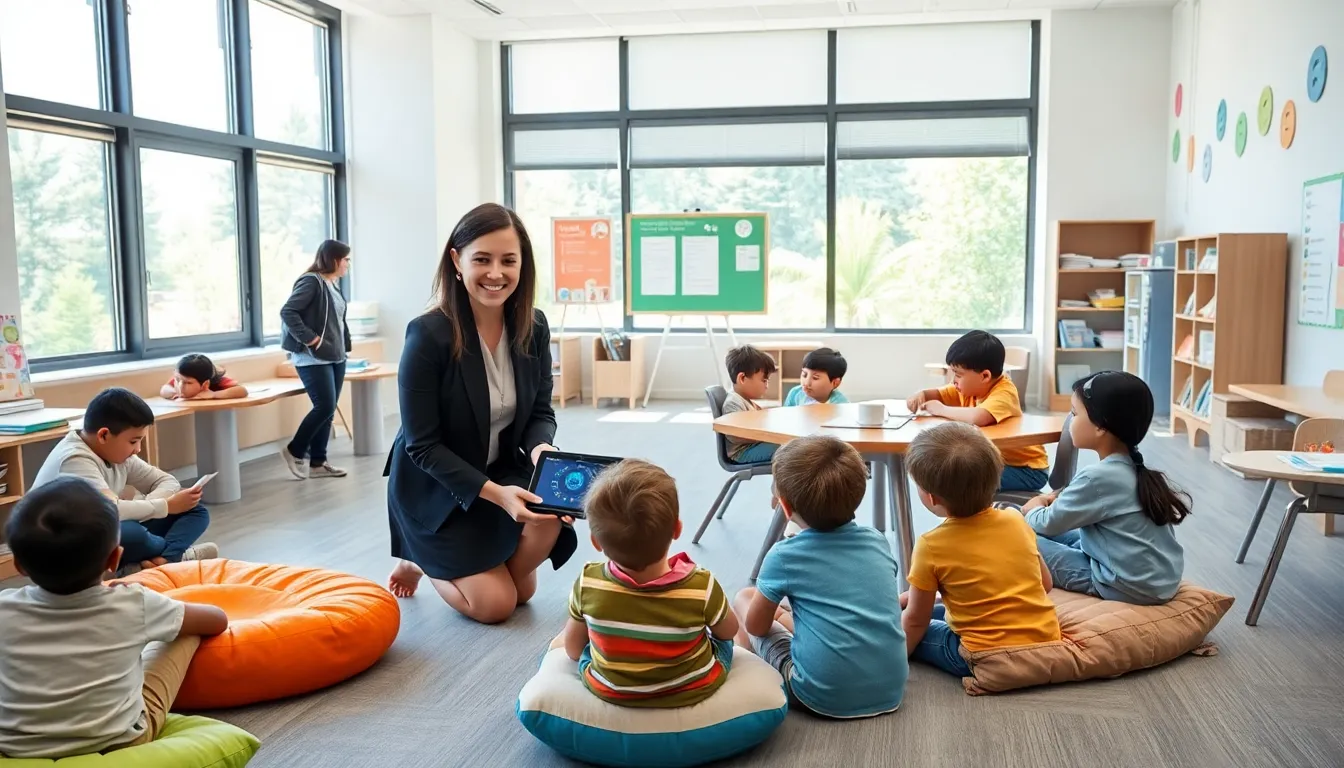
Modern elementary classrooms feature movable furniture. Students might sit at tables for group work, move to floor cushions for reading, or stand at elevated desks for writing. Teachers rearrange the room throughout the day based on lesson needs.
This flexibility serves multiple purposes. It accommodates different learning styles. Some kids focus better when they can move around. Others prefer quiet corners for independent work. Flexible spaces let teachers meet various needs without major disruptions.
Many schools have added collaboration zones, maker spaces, and quiet areas within single classrooms. A student who finishes work early can move to a reading nook. Groups working on projects gather at larger tables.
Color, lighting, and acoustics also receive attention. Research shows these elements affect concentration and mood. Schools are choosing calmer colors, adding natural light where possible, and using sound-absorbing materials to reduce noise.
Budget constraints mean not every school can renovate completely. But even simple changes help. Rolling chairs, portable whiteboards, and area rugs can transform a traditional classroom without major expense.
Teachers who’ve adopted flexible designs report fewer behavior problems and more student engagement. Kids take ownership of their learning environment when they have choices about where and how they work.