
Table of Contents
ToggleShopping for a newborn can feel overwhelming. New parents face endless product options, conflicting advice, and the pressure to get everything “right” before baby arrives. The good news? Most families need the same core items to care for their best newborns during those first few months.
This guide breaks down the best newborn essentials into clear categories. From clothing and feeding supplies to sleep products and soothing gear, each section covers what actually matters. Skip the unnecessary extras and focus on what works.
Key Takeaways
- Focus on 0-3 month clothing instead of newborn sizes since babies outgrow their smallest clothes within weeks.
- The best newborns sleep safer on firm, flat surfaces with no loose bedding—skip pillows, bumpers, and stuffed animals.
- Stock at least 10-12 burp cloths and 300+ diapers for the first month to avoid stressful last-minute shopping trips.
- Velcro or zipper swaddles help newborns sleep better by mimicking the womb environment while simplifying the process for tired parents.
- Baby carriers, swings, and white noise machines are valuable soothing tools—experiment to find what works for your newborn.
- Limit baths to 2-3 times per week to protect your newborn’s sensitive skin from drying out.
Must-Have Newborn Clothing and Swaddles
Newborns grow fast. Most babies outgrow their smallest clothes within weeks, so stocking up on tiny outfits isn’t practical. Smart parents buy just enough clothing in newborn sizes and focus on 0-3 month options instead.
Essential clothing items include:
- 5-7 onesies (short and long sleeve)
- 4-5 footed sleepers or sleep gowns
- 2-3 pairs of soft pants
- 3-4 pairs of socks or booties
- 1-2 hats for temperature regulation
- 1 jacket or bunting for outdoor trips
Swaddles deserve special attention. The best newborns sleep better when wrapped snugly, mimicking the womb environment. Velcro or zipper swaddles simplify the process for tired parents. Muslin swaddle blankets offer versatility, they work for swaddling, nursing covers, and burp cloths.
Look for soft, breathable fabrics like cotton or bamboo. Avoid anything with scratchy tags, tight elastic, or complicated snaps. Babies need quick diaper changes, so easy-access designs save time and frustration.
Essential Feeding Supplies for Newborns
Feeding takes up a huge chunk of newborn care. Whether breastfeeding, bottle feeding, or combining both, parents need specific supplies ready before baby arrives.
For breastfeeding parents:
- A quality breast pump (manual or electric)
- Nursing bras and pads
- Nipple cream for soreness
- A nursing pillow for support
- Milk storage bags or containers
For bottle feeding:
- 6-8 bottles in various sizes
- Slow-flow nipples designed for newborns
- A bottle brush and drying rack
- Formula (if not breastfeeding)
Burp cloths belong on every feeding list. The best newborns spit up frequently, and absorbent cloths protect clothing and furniture. Stock at least 10-12 burp cloths for easy rotation between laundry loads.
A comfortable feeding chair helps during those long nighttime sessions. Look for supportive armrests and easy-clean fabric. Some parents prefer gliders or rockers, which add gentle motion to help calm fussy babies during feeds.
Safe Sleep Products for Your Baby
Safe sleep matters more than any other newborn purchase. The American Academy of Pediatrics recommends placing babies on their backs on firm, flat surfaces with no loose bedding.
Core sleep products include:
- A crib, bassinet, or play yard with a firm mattress
- 2-3 fitted sheets (look for snug fits)
- A wearable blanket or sleep sack
Skip the pillows, bumpers, and stuffed animals. These items increase suffocation risks and have no place in a newborn’s sleep space. The best newborns sleep safely in bare cribs with only a fitted sheet.
Bassinets work well for the first few months. They’re smaller than cribs, portable, and keep babies close during nighttime feedings. Many parents keep a bassinet bedside for the first 3-4 months before transitioning to a crib in the nursery.
White noise machines help many newborns sleep longer. The consistent sound blocks household noises and mimics sounds from the womb. Choose machines with adjustable volume and auto-shutoff features.
Diapering and Hygiene Basics
Newborns go through 10-12 diapers daily. That’s roughly 300 diapers in the first month alone. Stocking up before baby arrives saves stressful last-minute store runs.
Diapering essentials:
- Newborn and size 1 diapers (don’t overbuy newborn sizes)
- Unscented baby wipes
- Diaper rash cream
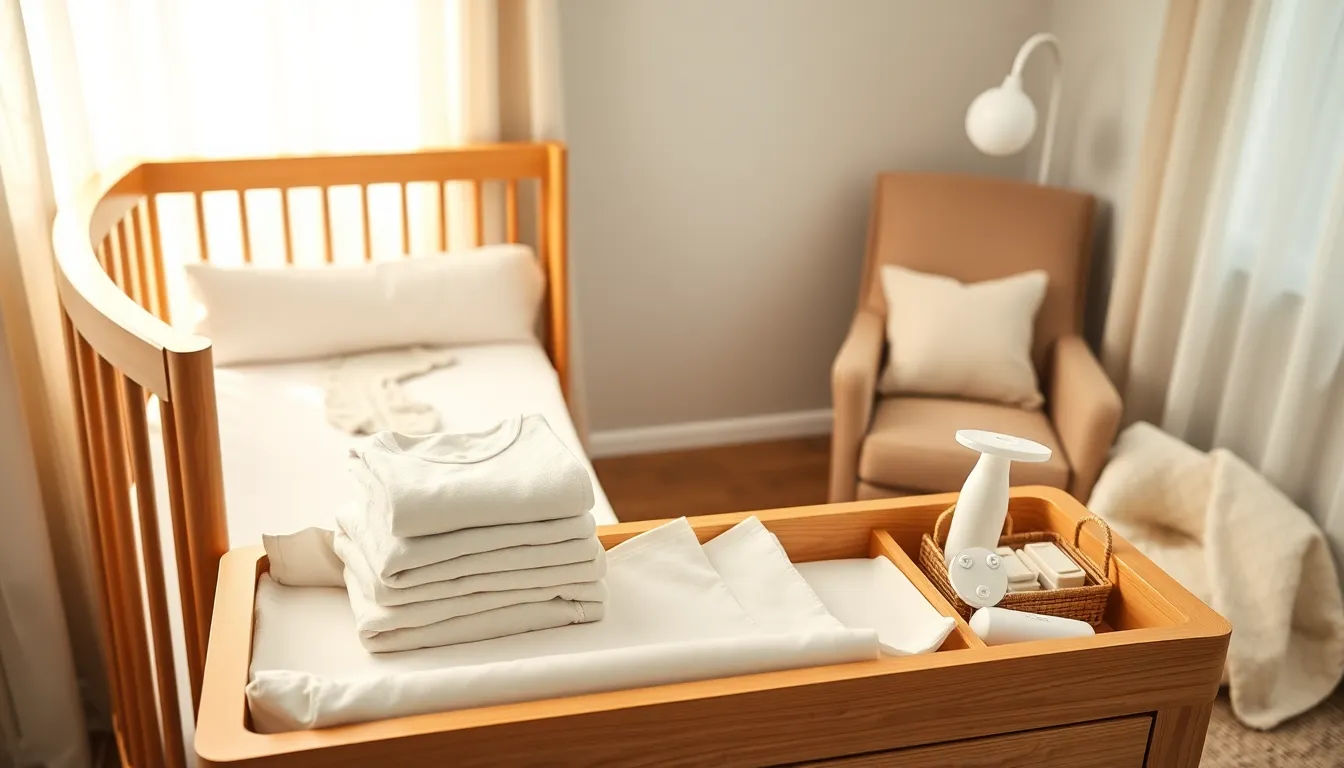
- A changing pad with washable covers
- A diaper pail for odor control
Bathing a newborn doesn’t require fancy equipment. A simple baby tub, soft washcloths, and gentle, fragrance-free soap cover the basics. The best newborns only need 2-3 baths per week, more frequent bathing can dry out sensitive skin.
Hygiene supplies to have ready:
- Baby nail clippers or files
- A soft-bristle brush or comb
- A bulb syringe or nasal aspirator
- Infant-safe thermometer
- Cotton balls for gentle cleaning
Organize these items near the changing station for quick access. Some parents use a caddy to keep everything portable between rooms.
Helpful Gear for Soothing and Comfort
Fussy babies need soothing, and certain products make this easier. Not every item works for every baby, but having options helps parents find what clicks.
Popular soothing products:
- Pacifiers (try different shapes to find what baby accepts)
- A baby swing or bouncer
- A baby carrier or wrap
- A sound machine with lullabies or white noise
Baby carriers offer hands-free convenience. Many parents wear their newborns while doing household tasks, walking, or soothing a fussy baby. Wraps work well for the smallest babies, while structured carriers suit older infants better.
Swings and bouncers provide motion that calms many best newborns. Look for models with multiple speed settings and reclining positions. Some babies prefer gentle side-to-side motion, while others like front-to-back swinging.
A play mat with hanging toys gives babies visual stimulation during awake periods. Even newborns benefit from tummy time on soft, padded surfaces. Start with just a few minutes daily and increase as baby grows stronger.