
Table of Contents
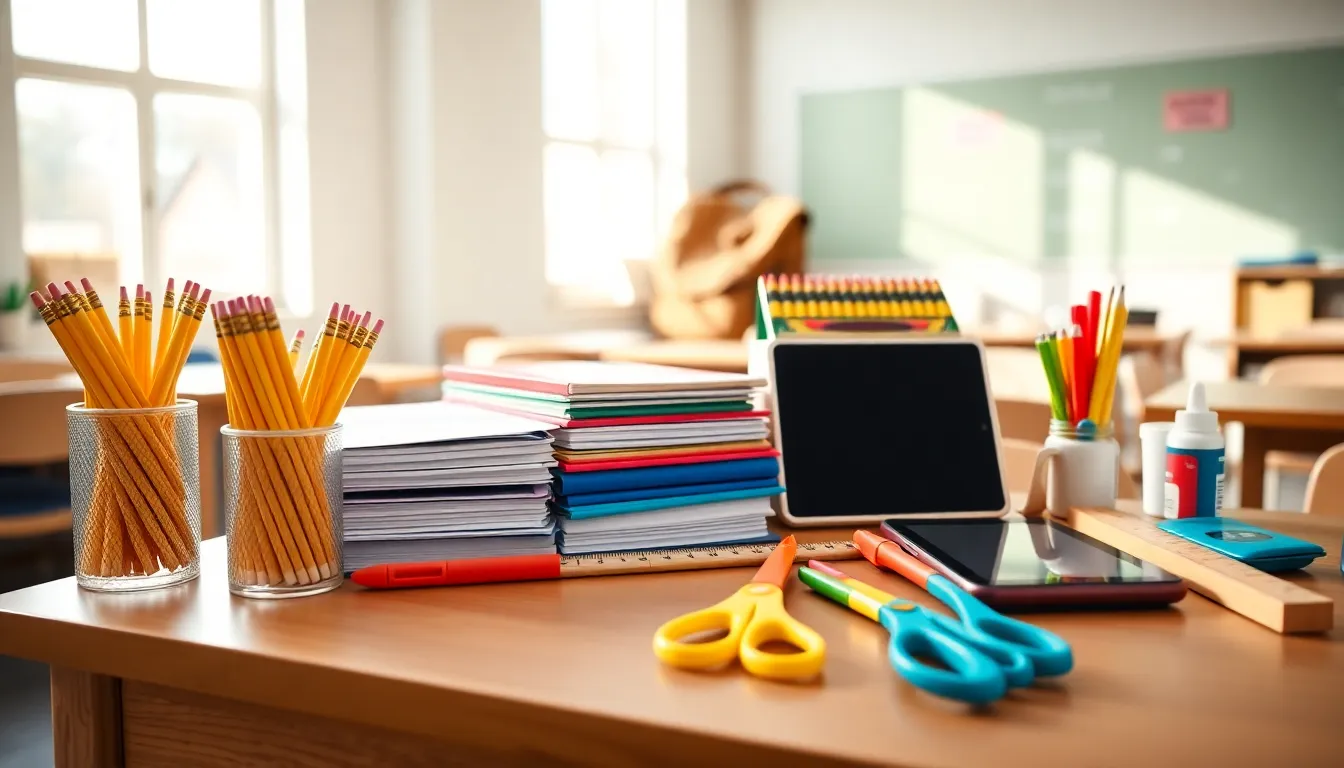
ToggleElementary school tools shape how children learn, create, and grow during their formative years. The right supplies help students complete assignments, stay organized, and build skills they’ll use for life. From pencils to tablets, these tools support daily learning in meaningful ways.
Parents and teachers often wonder which supplies matter most. Some items are obvious, pencils, notebooks, scissors. Others might surprise you. This guide covers the essential elementary school tools every young learner needs to succeed in today’s classrooms.
Key Takeaways
- Elementary school tools like pencils, erasers, and notebooks form the foundation of daily learning across all subjects.
- Organizational supplies such as folders, binders, and planners help students build responsibility and reduce academic stress.
- Math manipulatives like base-ten blocks and fraction tiles make abstract concepts concrete and easier to understand.
- Art and craft materials develop fine motor skills while giving students a creative break from academic work.
- Modern classrooms blend traditional elementary school tools with technology like tablets, educational apps, and interactive whiteboards.
- Choosing age-appropriate supplies—from safety scissors for younger students to calculators for upper grades—supports each child’s developmental stage.
Writing and Drawing Supplies
Writing and drawing supplies form the foundation of elementary school tools. Students use these items daily for nearly every subject.
Pencils remain the most important writing tool. Most teachers prefer #2 pencils because they work well on standardized tests and erase cleanly. Mechanical pencils suit older elementary students who can handle the finer tips without breaking them constantly.
Erasers deserve their own mention. Pink erasers work fine, but white polymer erasers remove marks more completely without smudging. A good eraser saves students from frustration during spelling tests and math problems alike.
Crayons and colored pencils serve double duty. They’re essential for art projects and useful for color-coded learning activities. A 24-count crayon box covers most needs, though some teachers request larger sets.
Markers add variety to student work. Washable markers protect clothing and desks from permanent stains. Fine-tip markers help with detailed coloring, while broad-tip versions work better for posters and large projects.
Notebooks and paper complete this category. Wide-ruled paper suits younger students still developing handwriting skills. Composition notebooks stay together better than spiral versions, which can catch on backpack zippers and tear.
Organizational Tools for the Classroom
Organization skills start early, and the right elementary school tools make a difference. Students who stay organized tend to perform better academically and feel less stressed.
Folders keep papers sorted by subject or type. Two-pocket folders with prongs hold loose sheets securely. Color-coding folders by subject, blue for reading, red for math, helps children find materials quickly.
Binders work well for third grade and up. Three-ring binders with dividers teach students to categorize their work. This system prepares them for middle school expectations.
Pencil cases and boxes prevent supplies from scattering inside desks. A simple zippered pouch holds pencils, erasers, and small items together. Some students prefer hard plastic boxes that double as rulers.
Backpacks carry everything between home and school. Look for bags with padded straps, multiple compartments, and water-resistant material. Size matters, an oversized backpack overwhelms a kindergartner, while a tiny bag frustrates a fifth grader.
Planners and assignment books help older elementary students track assignments. Many schools provide these, but parents can purchase them separately. Writing down assignments builds responsibility and time management habits.
Math and Measurement Essentials
Math instruction requires specific elementary school tools beyond pencils and paper. These items make abstract concepts concrete and understandable.
Rulers introduce measurement skills. A 12-inch ruler with both standard and metric markings covers classroom needs. Flexible rulers bend without breaking, a practical choice for active young learners.
Scissors support math activities involving shapes and geometry. Safety scissors with blunt tips work for younger students. By third grade, most children can handle pointed scissors responsibly.
Basic calculators enter the picture around fourth or fifth grade. Teachers use them to check work and teach calculator literacy. Students still need to learn mental math first, but calculators become useful tools eventually.
Manipulatives help students visualize mathematical concepts. Base-ten blocks teach place value. Fraction tiles show how parts make wholes. Counting cubes demonstrate addition and subtraction in physical form.
Protractors and compasses appear in upper elementary grades. These tools introduce angle measurement and circle drawing. Students use them for geometry lessons and some art projects too.
Graph paper supports data collection and coordinate graphing. It also helps students line up numbers in columns during long division and multiplication.
Art and Craft Materials
Creative expression requires its own set of elementary school tools. Art activities develop fine motor skills, encourage problem-solving, and give students a break from academic work.
Glue holds projects together. Glue sticks offer mess-free application for paper crafts. Liquid glue works better for heavier materials like popsicle sticks and fabric scraps. Purple glue sticks that dry clear help children see where they’ve applied adhesive.
Construction paper provides color and texture for countless projects. Standard packs include multiple colors. Heavier cardstock works better for items that need to stand up or last longer.
Paint supplies expand creative possibilities. Washable tempera paints clean up easily. Watercolors teach color mixing and brush control. Don’t forget paint cups, brushes in various sizes, and smocks or old shirts.
Modeling clay and play dough develop hand strength and creativity. Air-dry clay creates permanent sculptures. Regular play dough suits repeated use and experimentation.
Craft supplies like pipe cleaners, pom-poms, googly eyes, and buttons turn basic projects into memorable creations. A well-stocked craft bin inspires imagination and makes school more fun.
Technology Tools in Modern Classrooms
Technology has transformed elementary school tools over the past decade. Digital devices now complement traditional supplies in most classrooms.
Tablets and laptops support learning across subjects. Schools often provide devices through 1:1 programs. Students use them for reading apps, math games, research projects, and writing assignments. Many districts use Chromebooks because they’re affordable and easy to manage.
Headphones let students work independently on audio-based lessons. Over-ear headphones last longer than earbuds for young children. Some teachers require headphones with microphones for language learning activities.
Styluses help students interact with touchscreens more precisely. Young children find them easier to control than fingers for drawing and writing apps.
Educational software and apps extend learning beyond textbooks. Programs like Khan Academy Kids, IXL, and Reading Eggs reinforce classroom instruction. Teachers assign digital activities for practice and assessment.
Document cameras let teachers share student work with the whole class. Students also use them to present projects and demonstrate problem-solving steps.
Interactive whiteboards have replaced traditional chalkboards in many schools. They display digital content, run educational games, and record lessons for absent students.
Balancing screen time with hands-on learning remains important. The best classrooms blend traditional elementary school tools with technology thoughtfully.